Viscous-inviscid interacting (VII) boundary layer methods for aerodynamic analyses.
- Implemented a modular, strongly-coupled VII integral boundary layer method.
- Incorporated automatic differentiation for generalizations to coupled analyses (e.g. aero-structural).
- Researching generic optimization capabilities within various MDO architectures (MDF, SAND).
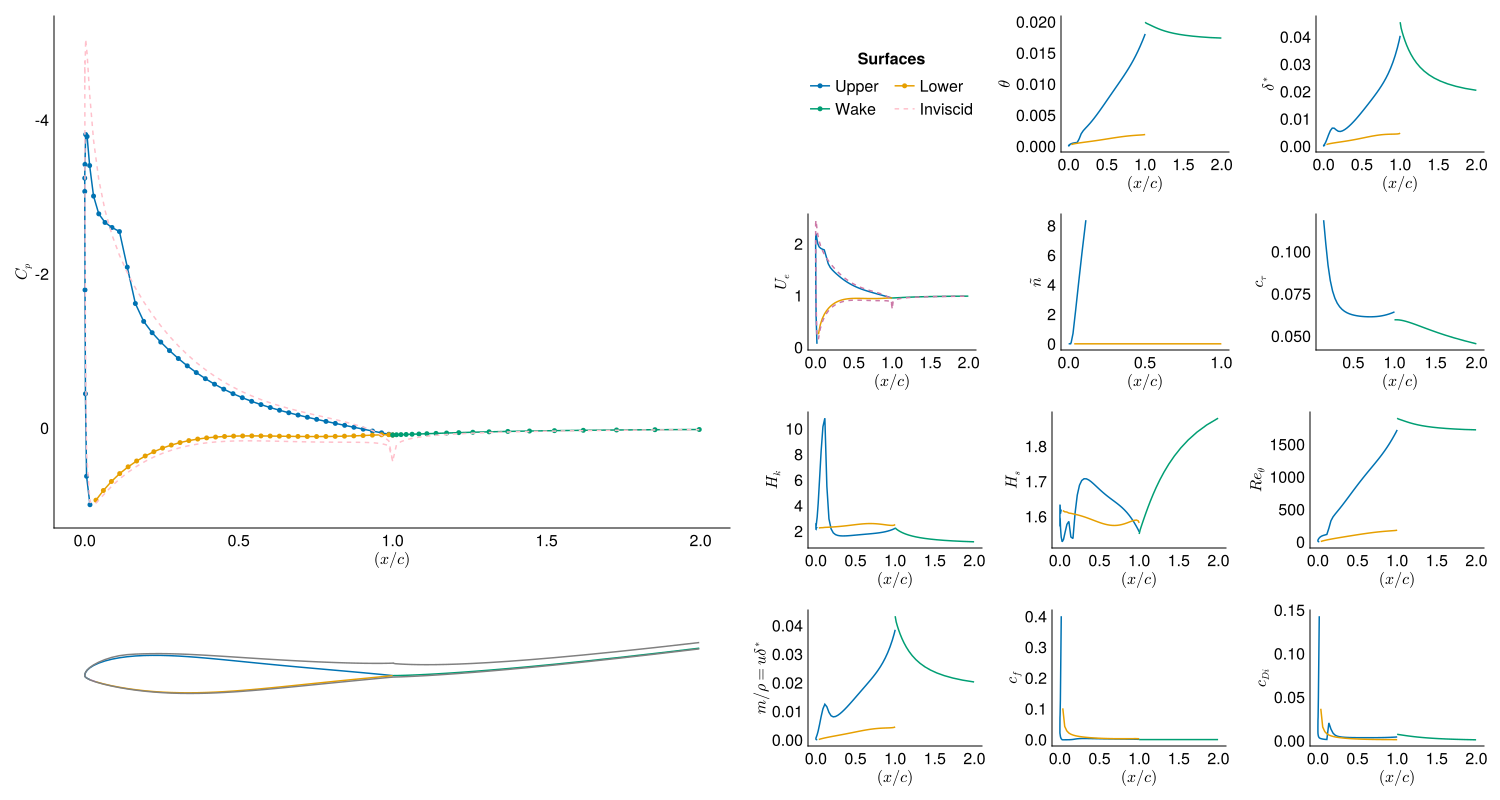
The solver strongly couples an inviscid panel solution with the integral boundary layer equations over the upper surface, lower surface, and wake, in a single differentiable system, implemented in ViscFoil.jl (currently private).
References
- Drela, Mark. Flight Vehicle Aerodynamics. The MIT Press, 2014.
- Drela, Mark and Giles, M. B. Viscous-Inviscid Analysis of Transonic and Low Reynolds Number Airfoils. AIAA Journal, 1986.
- Katz, Joseph and Plotkin, Allen. Low-Speed Aerodynamics - 2nd Edition. Cambridge University Press, 2001.